Category: Thoughts and Urbanism

  • From Conventional Cites to Smart Cites

    Dr Alaa Al Tamimi

    February 2026

    Rapid urbanization, climate change, and increasing pressure on energy and infrastructure systems have exposed the structural limitations of conventional urban planning and management models. With more than 70% of the global population projected to reside in cities by 2050, traditional reactive and fragmented governance approaches are no longer adequate. This paper examines the concept of the smart city as a fundamental transformation in urban governance logic rather than a mere technological upgrade. It conceptualizes the smart city as an integrated cyber-physical urban system grounded in data, governance, and international standards. Particular emphasis is placed on closed-loop feedback mechanisms and the role of ISO standards in enabling resilience, performance measurement, and quality-of-life improvement. The paper concludes that effective smart city transformation must be gradual, human-centered, and context-sensitive, prioritizing institutional reform and governance over isolated technological

    1. Introduction

    Cities are undergoing unprecedented structural pressures driven by rapid population growth, climate change, resource scarcity, and socio-economic inequality. Forecasts indicate that more than 70% of the world’s population will live in urban areas by 2050, intensifying demands on housing, mobility, energy, water, and governance systems. These dynamics have revealed the inadequacy of conventional urban planning models, which are largely reactive, sector-based, and institutionally fragmented. Within this context, the concept of the smart city has emerged as a strategic framework for managing urban complexity through integration, real-time data, and adaptive governance.

    2. Limitations of the Conventional City Model

    The conventional city is typically characterized by:

    • Reactive decision-making processes

    • Fragmented institutional and sectoral structures

    • Limited use of real-time data in planning and operations

    • Rigid planning mechanisms with low adaptability to shocks

    Such characteristics lead to inefficiencies in service delivery, delayed responses to crises, suboptimal resource utilization, and declining urban quality of life. As urban systems grow more complex, these limitations become structurally embedded and increasingly costly.

    3. The Smart City as a Cyber-Physical Urban System

    In contemporary scholarship, the smart city is increasingly understood as an integrated cyber-physical urban system rather than a collection of digital technologies. A useful analytical analogy is to conceptualize the city as a living organism:

    • Sensors and IoT devices function as sensory organs

    • Digital networks act as the nervous system

    • Data platforms and artificial intelligence represent the analytical brain

    • Governance and operational mechanisms constitute decision-making and action

    This systemic integration enables cities to sense conditions in real time, analyze complex interactions, make informed decisions, and implement adaptive responses.

    4. Closed-Loop Governance and Continuous Adaptation

    A defining feature of smart city operations is the adoption of closed-loop feedback governance, which replaces linear planning models with continuous learning cycles. This loop typically involves:

    1. Measurement and data collection

    2. Analysis and interpretation

    3. Decision-making

    4. Implementation

    5. Monitoring and evaluation

    6. Continuous improvement

    Such an approach allows cities to transition from static planning to dynamic, evidence-based management capable of responding proactively to emerging challenges.

    5. Smart Transformation as a Human-Centered, Gradual Process

    A common misconception equates smart city development with large-scale technology deployment. In practice, sustainable transformation requires:

    • Gradual implementation aligned with institutional capacity

    • Sensitivity to local social, cultural, and economic contexts

    • Emphasis on human needs, inclusion, and quality of life

    • Governance reform preceding or accompanying technological expansion

    People, data, and institutions—rather than devices alone—constitute the foundational pillars of smart city transformation.

    6. The Role of International Standards (ISO)

    International standards, particularly ISO standards for smart and sustainable cities, play a critical role in structuring smart city initiatives. They provide:

    • Systematic performance measurement frameworks

    • Benchmarking and comparability across cities

    • Interoperability between systems and institutions

    • Transparency, accountability, and governance alignment

    • Support for resilience and long-term sustainability

    In the absence of standards, smart city projects risk fragmentation, inefficiency, and limited strategic impact.

    7. Smart Cities and Urban Resilience

    Smart city frameworks contribute directly to urban resilience by enabling:

    • Rapid response to climate, infrastructure, and socio-economic shocks

    • Improved management of energy, water, and mobility systems

    • Enhanced social equity and service accessibility

    • Strengthened community cohesion and adaptive capacity

    Resilience thus emerges as an outcome of integrated data governance, institutional coordination, and standards-based management.

    8. Conclusion

    This paper argues that the smart city represents a paradigmatic shift in urban governance rather than a technological trend. Its core value lies in transforming cities from reactive, fragmented systems into adaptive, learning-oriented entities governed by data, standards, and integrated decision-making. A genuinely smart city is not defined by the density of its technologies, but by its capacity to understand itself, govern complexity, and place human well-being at the center of urban development.

    ** Note:

    This paper is adapted from a lecture presented by Dr. Alaa Al-Tamimi, PhD, P.Eng., at a virtual professional conference organized by Urban Reform Consultant (URC) as part of the URC-CPD Q1-2026 program.

    نشر على مدونة الدكتور علاء التميمي
    altamimialaablog.com

  • Kura Hulanda Museum: Reclaiming a Stolen Memory from the Margins

    In the heart of Willemstad, the capital of Curaçao, amid its brightly colored façades that evoke a calm Caribbean-European charm, stands the Kura Hulanda Museum.

    Yet this place does not welcome visitors with beauty alone, but with questions. It is not a space for spectacle, but a quiet confrontation with a long history of stolen memory.

    This museum does not narrate the story of an island only. It places the visitor inside a global network of historical violence:

    Africa, Europe, the Caribbean, and the Americas—present not as geography, but as intertwined routes of plunder, redefinition, and the confiscation of narrative.

    Modern Falsifications of History: When Origins Are Rewritten

    One of the first galleries presents a panel titled Modern Falsifications of History.

    It is not a neutral educational display, but a direct intellectual indictment of centuries of academic distortion.

    Through carefully selected quotations, the exhibit asserts that the cradle of human civilization lies in Africa, and that the deliberate separation of ancient Egypt from its African context was not a scientific conclusion, but an ideological necessity—designed to legitimize racial hierarchy and colonial domination.

    Here, history is not shown as it was taught, but as it was appropriated, edited, and repackaged.

    A long timeline labeled African Kingdoms documents the empires of Ghana, Mali, and Songhai, along with trans-Saharan trade networks and sophisticated systems of governance, economy, and knowledge.

    The message is unmistakable:

    Africa was never a historical void. It was a global actor long before its routes were severed, its resources plundered, and its people forcibly displaced.

    That these narratives are displayed in the Caribbean is no coincidence. Many descendants of those kingdoms ended their journey here—separated from their land, and just as violently, from their history.

    The Middle Passage: When the Sea Became an Instrument of Dehumanization

    The most haunting section is devoted to the Middle Passage—the transatlantic crossing.

    A silent chronological wall traces the trade from the fifteenth century through Spanish and Dutch domination, ending with the late abolition of slavery.

    Time here is not measured in years, but in loss.

    Each date corresponds to thousands of lives that never arrived, and stories that were never recorded.

    This is not merely a wounded memory, but a stolen one:

    Bodies were taken, narratives erased, and history later resold in polished books stripped of victims.

    Islam and Trade: A Complex History Beyond Simplification

    With notable balance, the museum presents the spread of Islam and trans-Saharan trade, highlighting figures such as Mansa Musa, reminding us that Africa was not merely influenced by the world—it actively shaped it.

    The trade route maps dismantle the myth of African isolation and restore its place as a connected, dynamic participant in the pre-modern global system.

    From Africa to Baghdad: A Shared Stolen Memory

    As I walked through the museum, Africa was not the only presence in my mind—Baghdad was there too.

    The mechanisms of dispossession are strikingly similar:

    Sometimes by chains,

    sometimes by maps,

    sometimes by curricula,

    sometimes by silence.

    Just as African memory was stolen, so too were the memories of many Arab cities—redefined from outside, compressed into narratives that deny their historical depth.

    Conclusion

    Kura Hulanda Museum is not a space of mourning, but one of reclamation.

    It reminds us that memory does not die when it is stolen—it remains suspended, waiting to be reclaimed by those to whom it belongs.

    History is not recovered through lamentation,

    but through reclaiming the right to tell it.

  • Baghdad:The Mirage City Between Promised Architecture and Deferred Urban Planning

    In the mid-20th century, Baghdad became a global laboratory for modern architecture and urban planning. Between 1952 and 1982, renowned names such as Frank Lloyd Wright, Le Corbusier, Walter Gropius, Gio Ponti, and Alvar Aalto were invited to envision a modern capital that aspired to be the cultural and economic heart of the Middle East. Yet those ambitions soon dissolved into a “mirage,” undone by political turmoil, leaving only a handful of buildings scattered amid waves of conflict.

    Grand Designs: From Modernism to Utopia

    Frank Lloyd Wright – Plan for Greater Baghdad (1957)

    • Imagined Edena Island in the Tigris River, with an opera house, a university, museums, and a colossal statue blending Eastern myths with modern symbolism.

    • The plan never moved beyond drawings, halted by the 1958 revolution.

    Le Corbusier – The Sports Complex

    • Proposed a vast Olympic complex with indoor and outdoor arenas.

    • Only the Baghdad Gymnasium was completed, inaugurated in 1980, standing as the lone witness of his vision.

    Walter Gropius, Gio Ponti, Alvar Aalto, and others

    • Drafted university campuses, cultural centers, and museums.

    • Their projects remained unrealized, trapped between international ambition and Iraq’s shifting politics.

    Urban Planning: Vision and Constraints

    Foreign experts like Constantinos Doxiadis developed masterplans for Baghdad: zoning neighborhoods, wide boulevards, and green belts. Their aim was to balance Islamic heritage with modern urban life.

    But these plans faced two major obstacles:

    1. Constant political upheavals, from monarchy to successive republics.

    2. Lack of institutional continuity, preventing long-term strategies.

    Whereas Riyadh benefited from political stability and oil wealth to implement Doxiadis’ plans, Baghdad oscillated between “paper visions” and improvised realities.

    What Was Built: Symbolism Over Modernity

    While cultural and academic projects faltered, symbolic monuments advanced, particularly during the Iran-Iraq War:

    • Monument to the Unknown Soldier (1982) by Khalid al-Rahhal and Marcello D’Olivo.

    • Martyr’s Monument (1983), a split turquoise dome sheltering an eternal flame.

    • Babylon Hotel (1982), a modern reinterpretation of the ancient ziggurat.

    Iraqi architect Rifat Chadirji played a pivotal role in translating modernism locally, through works like the Abboud Building (1955) and numerous government structures.

    Regional Comparisons

    • Cairo: Nasser’s projects like Nasr City echoed modernist ideals but were overwhelmed by demographic pressure.

    • Riyadh: Successfully applied international masterplans, producing organized districts and infrastructure.

    • Doha and Abu Dhabi: Later used oil wealth to attract global “starchitects” and build what Baghdad had once aspired to.

    The lesson is clear: architectural modernism cannot flourish without political stability and sustainable urban policy.

    Reflective Conclusion

    Looking at these unbuilt projects today, I see more than abandoned blueprints. They are fragments of dreams — a city that reached for greatness but was pulled back by turmoil.

    I wonder: had Wright’s Edena Island or Gropius’ university been realized, would Baghdad’s youth have grown up seeing their city rival Paris or Tokyo in culture and learning?

    Yet Baghdad never dies. She has swallowed wars and reinvented herself countless times. Perhaps those deferred projects gave her something more precious: the ability to remain an open space for imagination, teaching us that urbanism is not just walls but a promise awaiting its moment of truth.

    And amid the ruins, I remain convinced: Baghdad will continue to inspire the world, as it once inspired Wright and Le Corbusier. One day, when the city reconciles with itself, it will live up again to its ancient name: Dar al-Salam – the Abode of Peace.

  • Baghdad Dar Al-Salam – A City Once Called the Abode of Peace.

    I am pleased to announce that my new book, “Baghdad Dar Al-Salam – A City Once Called the Abode of Peace,” will be published soon.

    In this work, I tell the story of Baghdad from within its walls, from its founding in the eighth century, through its golden age under the Abbasids, to its transformations in the twenty-first century.

    In its pages, I blend historical depth with personal reflection, my brief and intense experience as a resident of Baghdad after 2003, and my vision of a city that I hope will regain its essence as the “Abode of Peace.”

    The book offers a rare perspective from the heart of Baghdad, far removed from the usual outsider perspective, and is an invitation to reflect on the city’s past, present, and future.

    This book is directed primarily at the international reader. Most of what has been written about Baghdad in languages other than Arabic was written by foreign journalists who accompanied military campaigns or Orientalists who held their visions. The images of Baghdad in their writings reflected their perspectives, not the pulse of its people. I believe this work represents the first serious attempt by an Iraqi writer to present Baghdad in English, after I published a book about it in French two years ago.

    But my goal does not stop there. This work is also directed at the young generation of Iraqis living abroad, those for whom migration forced English to be their first language, while their hearts remain attached to the walls and alleys of Baghdad. I wanted to address them in their language and extend a bridge of letters that would take them back to the scent of the Tigris and the warmth of the old alleys, even if only through the pages of a book.

  • Unforgettable cities and friends that are irreplaceable

    Travel is not just a transition from one place to another but an inner passage, reconciling with memory, and rejuvenating oneself with those we love. This summer, I embarked on a journey that spanned continents and cities, surrounded by dear friends, each of whom left their imprint and provided priceless companionship.

    We started from Georgia, where I was accompanied by my friends Shakir, who had come with me from Canada, and Farid, a childhood friend of mine who had come from Baghdad.

    Together we set off to Tbilisi, the capital of history, and then to Batumi on the Black Sea, where modernity blended with the magic of nature.

    From there, we crossed into Turkey to the quiet, green city of Tara Bazoun, where we had the expected meeting with our dear brother and friend, Dr. Nasser Al Mansoori, who had come from the UAE. We were overwhelmed by his generosity and good company. Four unforgettable days, marked by his elegant hospitality, the details of conversations, visits, and natural scenes that enriched his presence with us.

    We left Farid to return to Iraq and continued our journey into the heart of the Balkans with our friends Shaker and Ihsan, who had come from Canada. We began our adventure in Sarajevo, the capital of Bosnia and Herzegovina—a city marked by both wounds and tolerance, where the memory of its past is ever-present. From there to Budva in Montenegro, a town that combines the nobility of history with the whisper of the sea.

    The stations then followed:

    Tirana, the capital of Albania, is a city of renewal and reconciliation with a rich history.

    Skopje, the capital of North Macedonia, is a city where multiculturalism is embodied in its rich cultural heritage.

    Pristina, Kosovo’s capital, is alive despite its past wounds.

    The end of the trip is in Serbia, where we have seen the spectrum of history and the echo of change.

    The journey was a space for the soul, another map within us, a city of feelings, boundaries of memories, and paths of good company. In every town, we left a trace, and we carried lessons and reflections with us.

    On such journeys, we realize that cities, like human beings, need to be loved to be understood, and to listen to their pulse rather than to make judgments. And that good companionship is the treasure of travel, illuminates the path and gives meaning.

    Happy Friday to everyone who loves to travel and to everyone who finds in friendship a bridge between places and hearts.

    There is still plenty of time to age. For cities to come and new memories to be made.

  • Atatürk’s House in Trabzon: A Nation’s Memory Between Walls and Trees

    I left Batumi early in the morning, heading toward the Georgian-Turkish border—barely twenty kilometers away. On the Turkish side, a car was waiting for me, arranged thoughtfully by my brother and lifelong friend, Dr. Nasser Al-Mansouri, who spends his summers in the beautiful coastal city of Trabzon, nestled along the Black Sea and crowned by lush green hills.

    The drive from the border to Trabzon stretched for 180 kilometers along a scenic highway. The sea accompanied us from the west, and the emerald mountains rose gracefully on the eastern side, dotted with cascading waterfalls and sleepy villages that whispered forgotten stories.

    Dr. Nasser, an urban planning and road design expert who worked with me in the United Arab Emirates in the 1990s, knows my passion for urban history and memory-laden places well. On the way, he suggested we stop briefly in Erzincan to visit another house associated with Mustafa Kemal Atatürk—a detour I gratefully accepted.

    A Brief Stop, Etched in Memory

    In a quiet neighborhood in Erzincan, on a gentle hillside just off the highway, stood Atatürk’s modest house—humble from the outside but rich in symbolism. The two-story structure, built of stone and wood, was painted in soft white, its expansive windows opening onto the surrounding fields.

    Inside, the house offered a sense of stepping into another era. The rooms were simple yet dignified, retaining original furnishings and rare photographs of Atatürk during his visits to Eastern Anatolia. In one corner, Ottoman books were carefully stacked beside an aged map of the Turkish Republic. An old wooden desk and a vintage typewriter hinted at the thoughtful presence of a leader drafting visions for a new nation.

    Though the visit was brief, it left a deep impression. Even in a modest home like this, Atatürk’s legacy lingered in every corner and object.

    On to Trabzon… Where Memory Finds Form

    By evening, I arrived in Trabzon and made my way to Atatürk’s Pavilion (Atatürk Köşkü), perched on a verdant hill in the Boztepe district. The mansion overlooks the Black Sea, standing guard over a city that has witnessed profound transformations throughout the 20th century.

    Built in 1890 by Konstantin Kabayanidis, an Ottoman subject of Greek or Armenian descent, the house was originally a summer retreat for his family. But history is merciless with permanence. In 1923, following the Treaty of Lausanne, Turkey and Greece undertook a massive population exchange, displacing hundreds of thousands of Orthodox Christians from Turkish lands and replacing them with Muslims from Greece. Thus, the mansion passed into state hands—its private story absorbed into the larger narrative of a reshaped nation.

    Atatürk first visited the house on September 15, 1924, less than a year after founding the Republic. He saw in it a vision of the Turkey he wished to build: modern, rooted, balanced. On a return visit in 1930, he made a deeply symbolic gesture—donating all his personal property to the Turkish people.

    After his death, the house was inherited by his sister, Makbule Hanım, until April 6, 1943, when the municipality of Trabzon acquired and restored it, transforming it into a museum bearing his name. Since then, it has welcomed all who seek to walk through history, not merely read it.

    When Stones Speak

    A sense of reverence wraps around you when you enter the mansion. The walls are adorned with delicate classical motifs. Crystal chandeliers hang from lofty ceilings—the hardwood floors gleam, softened by handwoven carpets echoing a bygone Ottoman elegance.

    The rooms are carefully arranged, and many are still furnished with period pieces: marble-top tables, carved wooden chairs, gilded mirrors, and ticking wall clocks that seem to defy time. In a quiet corner, a desk believed to have belonged to Atatürk remains silent yet eloquent.

    The house spans three floors, each telling its own story. The upper level contains Atatürk’s private bedroom—modest and serene. No lavish display, just a space for contemplation and quiet leadership.

    And as I left the house, I whispered to myself:

    How noble are the nations that preserve the homes of their leaders—not to glorify individuals, but to honor an idea, and to respect an era that shaped what followed.

    Future generations are not required to agree with their historical figures, but they are duty-bound to protect the memory of those figures from erasure, simplification, or distortion.

    For in every old house, behind every table, hallway, and clock, there is something deeper than wood and stone—there is the story of a nation.

    Nations that erase the traces of their leaders with every shift in opinion, unknowingly erase fragments of their own identity.

    Leaders pass away, but the homes they lived in continue to ask us:

    Did you preserve what was? And did you understand why it was?

  • The Statue of Ilia Chavchavadze in Batumi: On Symbols That Endure… and Others That Are Erased

    The Statue of Ilia Chavchavadze in Batumi: On Symbols That Endure… and Others That Are Erased

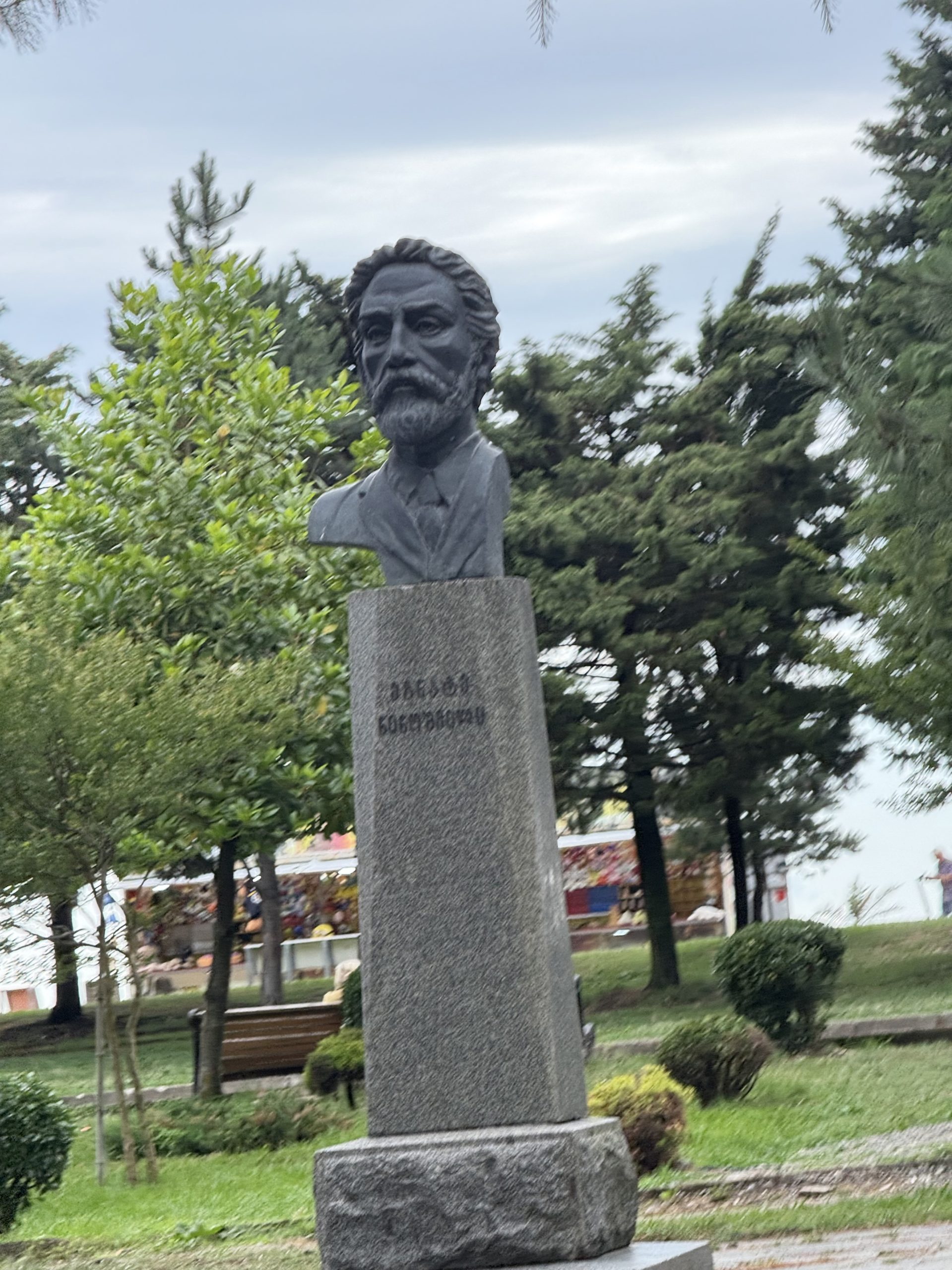
    During my recent visit to the coastal Georgian city of Batumi, I paused in reflection before a bronze bust of a figure whose features were unfamiliar to me, yet whose presence commanded respect. I stepped closer to read the inscription: Ilia Chavchavadze.

    One of Georgia’s great national revivalists stood, a poet, thinker, and reformer of the 19th century who championed the Georgian language, identity, and sovereignty under Russian rule.

    But this was not just a moment of cultural discovery — it became a moment of questioning:

    How do civilized nations preserve their memory? And how do living nations honor their symbols?

    In countries where democracy and pluralism prevail — such as modern Georgia — cultural figures are celebrated and immortalized in public spaces, educational institutions, and even on currency. These nations respect their past not by rewriting it, but by building upon it, layer by layer.

    In contrast, many developing nations suffer from a chronic illness: their collective memory is hostage to political power. Statues are toppled, street names erased, and entire cities renamed at the whim of whoever holds the reins of authority, as though history must be rewritten with each new regime.

    Baghdad as a Stark Example:

    In Baghdad, the city of civilizations, the pattern is clear — public names and symbols change with every political shift:

    • Al-Rasheed Street, once Baghdad’s cultural and commercial artery, now stands in neglect, stripped of its former glory.

    • The King Faisal II Bridge, inaugurated in 1957, was renamed 14th of July Bridge after the 1958 revolution, and later became known as the Republic Bridge, reflecting not a narrative of continuity, but one of repeated rupture.

    • The City of Al-Thawra (Revolution City) became Saddam City, then was renamed again as Sadr City, erasing and rewriting identity with every ruling regime.

    • The statue of Caliph Abu Jaafar Al-Mansur, founder of Baghdad, was targeted multiple times after 2003, removed under sectarian or ideological pretexts, then reinstalled under public pressure — as if even stone must submit to political negotiation.

    Such treatment of public memory does not reflect critical reflection or cultural dynamism — it reflects a profound identity crisis and the absence of a mature state ethos.

    Standing before Chavchavadze’s statue in Batumi was not merely a touristic pause, but a moment of meditation on the value of symbolic continuity, cultural reverence, and honoring those who serve society through intellect and words, not swords and slogans.

    Will Baghdad ever honor its true minds — from Al-Jahiz and Al-Mutanabbi to Ali Al-Wardi and Muhammad Mahdi Al-Jawahiri — with monuments that transcend political fashion?

  • Warsaw: A City Between the Ruins of the Past and the Splendor of the Present**

    Warsaw: A City Between the Ruins of the Past and the Splendor of the Present**

    When I set foot on Warsaw’s sidewalks after forty years of absence, it felt like stepping into a fragmented dream. The city I left in the eighties, cloaked in the heavy mantle of communism, now swayed gracefully in elegant European attire. Glass skyscrapers embraced the sky, lively cafes whispered secrets of freedom, yet the old spirit still crepthrough the street corners like a nostalgic shadow clinging to memories.

    The Vistula River: Witness to Transformations

    I walked along the banks of the Vistula River, that lifeline which saw the city bleed during World War II, only to be reborn anew. Today, the river has transformed into an artistic tableau: illuminated bridges, bicycles gliding like happy ghosts, and young people laughing in a language I had never heard here before—the language of openness.

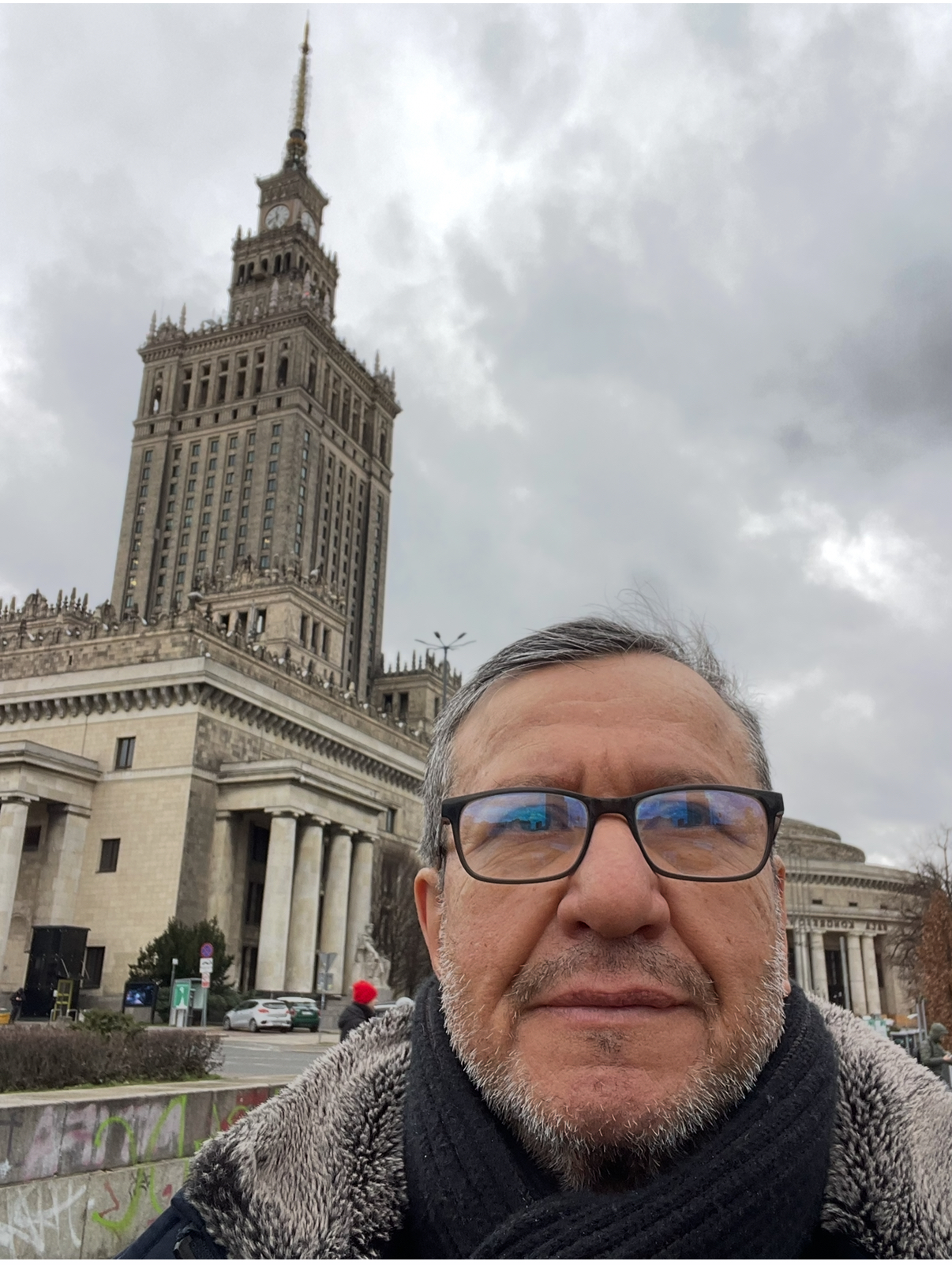
    At a floating café on the bank, I sipped coffee and contemplated the “Palace of Culture and Science,” that Stalinist giant that was once a symbol of oppression and now stands as a museum narrating the city’s story. Inside, among Chopin’s halls and science libraries, I stumbled upon a strange paradox: an ancient image of Mesopotamia—Iraq. I felt a peculiar warmth, as though history had tied me to this place with an invisible thread.

    The Old Town: When Stones Retell Their Story

    In “Stare Miasto” (Old Town), where buildings stood colorful as candy boxes, I paused at the market square. Here, every stone bore both wounds and salvation. During World War II, the Nazis destroyed 85% of the city, but the Poles rebuilt it with the precision of artists, relying on 18th-century paintings. Today, street bands sing in the same square that once witnessed mass executions.

    I asked a vendor about the secret of this resilience, and he answered while preparing a cup of tea:

    “Warsaw is like an old woman… she knows how to sew her new dress from the threads of her old one.”

    The Palace of Culture: An Unforgivable Witness

    The colossal palace, Stalin’s “gift,” still loomed tall like an unhealed wound. Some Poles see it as a humiliating relic, while others have made it part of their identity. I ascended to its rooftop at night, where Warsaw glittered beneath my feet like a sea of stars. From 230 meters high, I saw the past and present locked in battle:

    – **Here**, faded socialist housing blocks, reminiscent of an era of austerity.

    – **There**, the golden towers of “Złote Tarasy,” where capital converges.

    Baghdad and Warsaw: A Shared Architectural Thread**

    In a corner of my memory, I recalled that modern Baghdad was born from the hands of Polish engineers from “Polservice” in the seventies. How similar the fates of these two cities were: both were meticulously planned by experts, then torn apart by wars. The difference is that Warsaw managed to heal, while Baghdad still searches for its lost story.

    The Renaissance: When Freedom Becomes a Daily Rhythm

    In the once-poor district of “Praga,” where old factories groaned under communism, I now found artists’ studios and hipster cafés. A blue-eyed young man played a Chopin melody on his violin as electric cars glided through the streets.

    The numbers say Warsaw’s population has grown by only 200,000 since the eighties, but its spirit has multiplied a million times over. The city no longer fears strangers—here, it teaches its language to Ukrainians fleeing war and opens its doors to anyone seeking beauty.

    Farewell: A Lesson from Warsaw to Baghdad

    Before leaving, I stood before the “Little Insurgent” monument, which tells the story of Warsaw’s children who fought the Nazis with stones. Today, the entire city is a living monument to resilience.

    Warsaw taught me that cities are like people:

    – They can be crushed, but they cannot be killed.

    – They can be looted, but their spirit cannot be stolen.

    – And successful urban planning isn’t about concrete and steel, but the will to turn ruins into palaces.

    I left carrying a question: When will Baghdad, one day, tell its story the way Warsaw has?

  • Tbilisi: Where Past Meets Present-A Journey with Friends

    Tbilisi: Where Past Meets Present-A Journey with Friends

    We landed before dawn on Turkish Airlines. The arrivals hall was almost empty; our flight seemed to be the city’s wake-up call. Broad roads soon narrowed into the veins of Old Tbilisi, where wooden balconies hang like grape clusters. There I met my Canadian-based friend Samer, joined by Farah and Shakir—a pale-rose sunrise welcomed us.

    History’s Pulse beneath Narikala

    The fourth-century Narikala Fortress crowns the city. Below, Persian, Ottoman, and European façades mingle. In Abanotubani, sulfur steam rises from the baths, which gives Tbilisi its name (“tbili” = warm). Crossing the glass Bridge of Peace felt like watching the old city gaze into a modern mirror.

    Tbilisi’s Only Mosque — Harmony in Stone

    Amid the cobbled lanes stands Tbilisi’s only mosque—small in scale, vast in meaning. Its minaret rises beside church bells and sulfur domes, proving that the call to prayer can harmonize with chimes in a city seasoned by centuries of coexistence. One grasps Tbilisi’s tolerant soul from this spot before venturing deeper into its maze.

    Rustaveli Avenue, a Stone Opera

    Our hop-on bus rolled along Rustaveli Avenue—neo-classical opera house, old parliament, rose-hued theatre—while locals strolled with strong quiche coffee in hand.

    Sameba Cathedral, Beacon of Identity

    Across the Mtkvari River, the golden domes of Holy Trinity Cathedral glow over the skyline, symbolising Georgia’s post-independence revival.

    Mosaic of People, Flavours and Nightlife

    In Sololaki, we devoured khinkali dumplings and cheese-rich khachapuri, then slipped underground into an electronic-music club—evidence of Tbilisi’s rising nightlife fame.

    Urban Challenges

    Rush-hour jams, time-worn wooden houses, patchy infrastructure. Yet cable cars, façade grants, and riverside parks show a city determined to evolve without losing its soul.

    Farewell

    Tbilisi is not a pendulum between eras but the a river uniting two banks. I leave, assured its balconies still whisper new stories awaiting our return.

  • Life Between Buildings: Memory of Place

    Life Between Buildings: Memory of Place

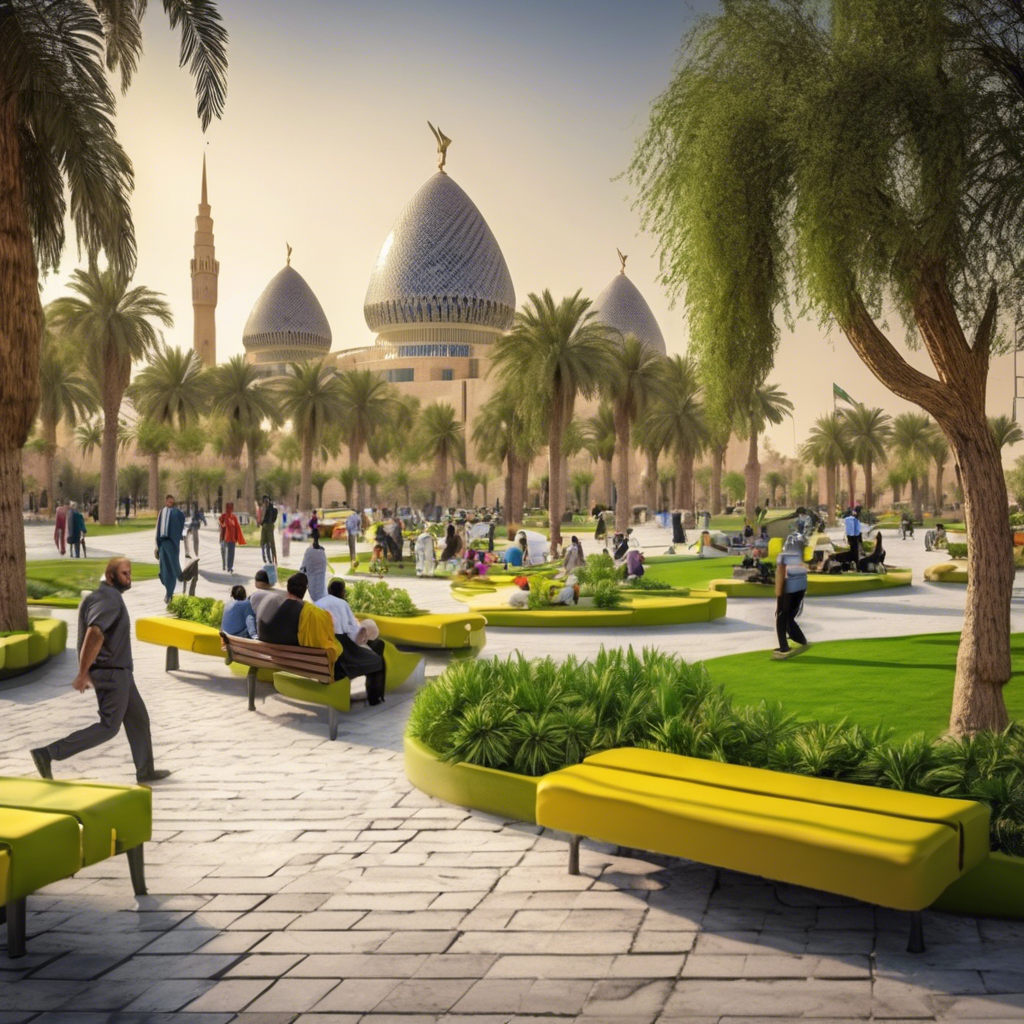
    Amid the hustle and bustle of cities and their towering buildings, Danish architect Jan Gehl whispers an elusive truth: “The soul of a city lies not in the stones of its buildings, but in the spaces that breathe between them.” In his famous book, “Life Between Buildings: Using Public Space,” Gehl turns the standard upside down, asserting that the beauty of urbanism lies not in the immensity of its towers, but in the warmth of its squares, the liveliness of its sidewalks, and the richness of the fleeting encounters that create the memory of a place.

    Let us delve with Gehl’s thoughts into the labyrinthine passages of two ancient Arab cities: Baghdad, with its markets that once sang tales, and Cairo, whose streets encapsulate a living, breathing history.

    What does life between these buildings look like today? And can public space still be a stage for human encounters?

    From the pulse of life to the silence of contraction, Baghdad was once a canvas of color and bustle, with cafes brimming with conversation, markets where hands intertwined, and squares telling stories of yesteryear. But war and violence transformed this space into a space fragmented by concrete barriers and fear during a crucial period in Baghdad’s history following the occupation in 2023. Later, public spaces disappeared in favor of traffic jams and slums. The city, once a magnet for walking and contemplation, now heralds haste and retreat.

    Cairo, on the other hand, tells a different story of contradiction: a historic city with a vibrant heart, surrounded by new, soulless neighborhoods. Narrow sidewalks force pedestrians to herd like a herd, and public parks are either neglected or enclosed by walls. Even the popular cafes, once a meeting place for small dreams, are fading in the face of the rise of enclosed malls, where socializing is transformed into consumption and public space into a private commodity.

    In his book “Life Between Buildings,” Jan Gehl divides city life into three categories:

    – Necessary, such as going to work or shopping.

    – Optional, such as sitting in a café for pleasure.

    – Social, those spontaneous encounters that create community.

    In Baghdad and Cairo, only essential activities remain, while activities that stir emotions and foster belonging have declined. Why? Because urban design no longer welcomes people, forcing them to hide behind the windows of their cars or the walls of their homes.

    Public space is a mirror of society. What do we see in Baghdad and Cairo?

    In his book “Cities for People,” Gehl proposes a simple solution:

    – Wide sidewalks that allow for fearless strolling.

    – Benches under the shade of trees, where strangers can meet their neighbors.

    – Small green spaces between buildings.

    These small details are what restore a city’s humanity. Perhaps simple sidewalk cafes or safe pedestrian crossings will suffice to bring life back to the streets.

    The lesson Jan Gehl presents in his books “Life Between Buildings” and “Cities for People” is clear: a successful city is not a collection of buildings, but rather the memories made daily in their corners. Baghdad and Cairo have a history of vibrant urbanism, but it needs to be rediscovered. What’s needed isn’t new skyscrapers, but rather the revival of those spaces where a child can play, where two neighbors can share a cup of tea, or where an idea can be born from a fleeting encounter.

    So will we listen to Gehl’s voice, or will we continue to build cities more inert than alive?