Author: importuser

  • Meeting the Giants in Alaska

    Meeting the Giants in Alaska…

    A Reception Fit for a Tsar

    These weren’t the usual cold moments we’re used to at leaders’ meetings. The warm Alaskan sun witnessed a rare warmth! Trump welcomed Putin at a military base with dazzling arrangements—as if to say to the world, “This is a meeting of a different kind.” Comfortable smiles, firm handshakes, and a friendly tone captivated the audience. Even observers agreed: No previous president has ever received such a reception!

    Three hours of negotiations took place behind closed doors at the military base. Negotiations covered weapons, alliances, trade deals, and perhaps more. Mystery surrounds everything, but will Trump, famous for his inability to keep secrets, reveal the details of the meeting? Will we ever know the truth, or will the most critical heart remain buried deep in Alaska?

    The wait won’t be long… Trump has no patience for secrecy!

    Observers are wondering: What will Trump reveal? Will his statements be as usual – surprising? Or has Putin succeeded this time in reining in the American president? One thing is sure: next week will be full of surprises.

    When leaders meet in the shadows, the real stories come to light! Next week will reveal whether this meeting was historic or just a media bubble.

  • Baghdad Dar Al-Salam – A City Once Called the Abode of Peace.

    I am pleased to announce that my new book, “Baghdad Dar Al-Salam – A City Once Called the Abode of Peace,” will be published soon.

    In this work, I tell the story of Baghdad from within its walls, from its founding in the eighth century, through its golden age under the Abbasids, to its transformations in the twenty-first century.

    In its pages, I blend historical depth with personal reflection, my brief and intense experience as a resident of Baghdad after 2003, and my vision of a city that I hope will regain its essence as the “Abode of Peace.”

    The book offers a rare perspective from the heart of Baghdad, far removed from the usual outsider perspective, and is an invitation to reflect on the city’s past, present, and future.

    This book is directed primarily at the international reader. Most of what has been written about Baghdad in languages other than Arabic was written by foreign journalists who accompanied military campaigns or Orientalists who held their visions. The images of Baghdad in their writings reflected their perspectives, not the pulse of its people. I believe this work represents the first serious attempt by an Iraqi writer to present Baghdad in English, after I published a book about it in French two years ago.

    But my goal does not stop there. This work is also directed at the young generation of Iraqis living abroad, those for whom migration forced English to be their first language, while their hearts remain attached to the walls and alleys of Baghdad. I wanted to address them in their language and extend a bridge of letters that would take them back to the scent of the Tigris and the warmth of the old alleys, even if only through the pages of a book.

  • The Doomsday Clock             A Pendulum on the Edge

    The Doomsday Clock A Pendulum on the Edge

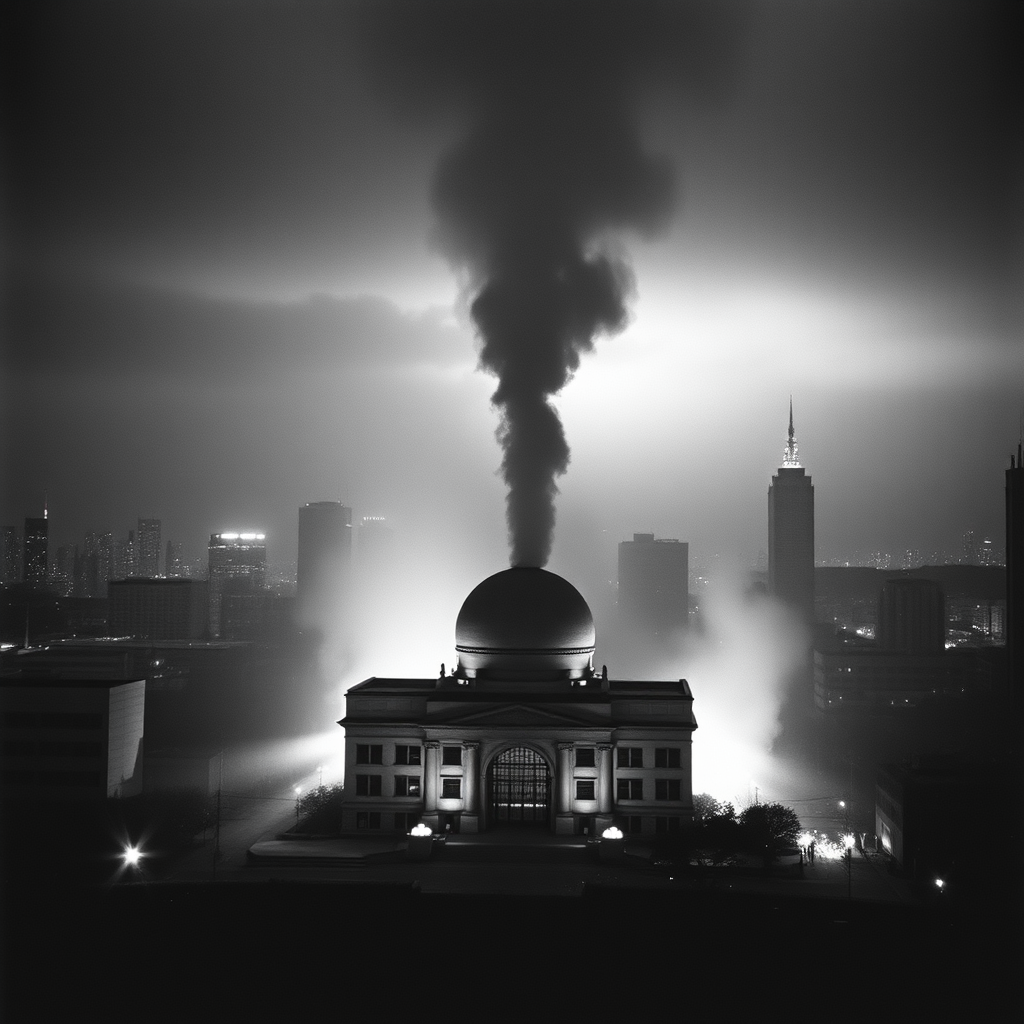
    Sometimes, danger doesn’t come in the form of an explosion, but rather approaches slowly, like a hand moving silently toward its end. There are moments in human history when silence is more dangerous than noise, and a warning more potent than a shock… Perhaps the “Doomsday Clock” is the most vivid embodiment of this idea.

    It’s not a clock on a wall, nor a hand turning on your phone, but an idea born from the heart of human fear, and it bears a chilling name: “Doomsday Clock.”

    It was invented by scientists who once participated in the creation of the most dangerous weapon known to humanity—the atomic bomb—and then their consciences awakened. They felt that, by opening the doors of power, they had also opened the doors of annihilation. So, they created a symbol not to tell us time, but to measure the distance between us and catastrophe.

    At this hour, midnight is not a time for sleep but rather the moment of the end—a nuclear war, a climate catastrophe, a global pandemic, or an uncontrolled technological collapse. The closer the minute hand gets to that moment, the more it signals that the world is approaching the brink of the abyss. If it recedes, it is a temporary breath of relief.

    Today, its hands are set by a select group of scientists and experts, who meet annually to examine maps of danger: the nuclear threat, climate change, the race for artificial intelligence, and the fragility of diplomacy between nations. They study the news, wars, torn agreements, and the melting of the ice, then decide: Are we heading toward the abyss or taking a step back?

    Its history is replete with contradictory moments:

    • 1947: It began at seven minutes to midnight.

    • 1953: It moved closer to just two minutes, at the height of the Cold War.

    • 1963: It moved away to 12 minutes after the Nuclear Test Limits Treaty.

    • 1991: It was at its furthest point, 17 minutes, with the end of the Cold War.

    • Today… we are only 90 seconds away, the closest distance in history, driven by the war in Ukraine, the faltering response to the climate crisis, and an alarming technological race.

    This clock is not a prophecy or a promise of a specific date. Rather, it is a silent alarm bell, but its echo is resounding in the minds of those who understand it. It reminds us that our fate is not written but depends on the decisions we make today.

    Either we turn back its hands or let it run until midnight… and then, there will be no time to look back.

  • Hiroshima, a Shadow will not Erase

    Hiroshima, a Shadow will not Erase

    On this day, August 6, 1945, at exactly 8:15 a.m., an American plane dropped a nuclear bomb over Hiroshima, dubbed “Little Boy,” writing a tragic chapter in human history. Only three days later, the horrific scene was repeated in the city of Nagasaki, where a second bomb, known as “Fat Man,” was dropped at 11:02 a.m., reigniting the flames of death.

    Numbers stand as a testament to the chapters of tragedy, turning into tears flowing from the eyes of history.

    – In Hiroshima, 140,000 people died, some dying quickly and others slowly, caused by the bomb’s radiation.

    – In Nagasaki, 74,000 lives were similarly horrific, leaving their souls to wander without shelter.

    Hundreds of thousands of survivors, now living dead, suffer from disfiguring burns and cancerous diseases that have ravaged their bodies, leaving children born bearing the scars of this tragedy, disfigured for generations to come.

    Today, as the bells of remembrance ring, they not only mourn a painful past, but also warn everyone in this world who possesses a nuclear weapon:

    “Beware… the sun may be stolen from the sky again, and this time… there may not be anyone left to bury the dead.”

    The world today, amidst increasing conflicts and wars, is witnessing an alarming escalation in geopolitical tensions, and the severity of threats is rising. In conflict zones such as the Middle East and Ukraine, history shows that nuclear weapons are not merely tools of destruction but a double-edged sword that threatens all of humanity.

    The escalation in armed conflicts we are witnessing today raises concerns about the possibility of nuclear wars, adding to the list of countless humanitarian disasters. Commemorating Hiroshima and Nagasaki should be an impetus for the international community to move urgently toward atomic disarmament and promote peace and understanding among nations.

    Current conflicts may lead to the use of nuclear weapons for reasons that may be unintended, threatening dire consequences. We must remember that scientific and technological progress should not be a pretext for acquiring weapons of mass destruction, but instead should be used in the service of humanity and improving the lives of individuals.

    Humanity deserves a safer world, free from nuclear threats. Therefore, our voices must be loud in demanding peace and rejecting all forms of violence, lest we rewrite the tragic chapters of history. Let us all move forward toward a world of hope and understanding, where memory serves as a lesson to protect our future and work together to build a better tomorrow.

  • When Iraq Chose to Stab Itself

    On these days in the scorching month of August 1990, the Iraqi ruler lost his mind and rushed into a shocking decision to occupy a sister country, Kuwait.

    The decision was not merely a political mistake; it was a crime against history and geography, and against two peoples united by Arabism, borders, and shared concerns.

    It was as if Iraq, burdened by the wounds of its long war with Iran, had not been satisfied with its bleeding, but had added an unhealed wound to itself, embarking on a path toward isolation, siege, and ruin.

    Since that occupation, everything began to collapse…

    The world imposed a stifling blockade that turned bread into a wish and medicine into a dream.

    The social fabric eroded, the economy collapsed, and the state, once described as strong and cohesive, disintegrated. Hope diminished, the light faded from mothers’ eyes, and the homeland became the victim of a decision whose price was not paid in palaces, but in the homes of people experiencing poverty, children’s schools, and hospital wards.

    Through that door that opened at dawn on August 2, all the storms that ravaged Iraq seeped in…

    From it seeped the invasion, then the occupation, then sectarianism, then destruction…

    It was as if that day was the spark of the end, not the beginning of liberation, as some portrayed it.

    And here we are, decades later, still paying the price of a moment of arrogance and an impulsive decision that divided what should have been united and destroyed what was built with the blood of generations.

    Oh, Iraq…

    How many times have your children paid the price for the mistakes of your rulers?

    And how many times has your back been broken because those in the decision-making seat saw only the illusion of glory, not the truth of history?

  • In the Face of Tragedy: A Jewish Voice Reflects on Gaza

    In my reading journey, I often seek books that represent perspectives different from my own. Understanding begins, I believe, with listening—even when the speaker stands across the chasm of pain.

    That’s what led me to pick up a book whose title struck me powerfully, Jewish After the Destruction of Gaza: A Reckoning, by Jewish-American author Peter Beinart.

    I initially approached it as an intellectual document—a view from “the other side.” I wasn’t expecting the level of moral honesty and courage I encountered in its pages.

    Beinart, a well-known political thinker and writer, doesn’t defend Israel. Instead, he confronts it—and us—with hard questions: What does it mean to be Jewish today, after Gaza? Can silence ever be justified in the name of solidarity? And where do Jewish values stand when lives are destroyed in the name of identity?

    He writes not with hostility but with sorrow. He doesn’t attack Judaism, but how it has been used to justify policies far removed from its ethical teachings of compassion and justice.

    In his chapters, Beinart explores how the narrative of Jewish survival after the Holocaust has turned, for some, into a justification for excessive power. He questions the role of major American Jewish institutions in enabling war and siege. But he doesn’t stop at critique—he offers a vision: a future beyond ethno-nationalism. A single, democratic state for all—Jews and Palestinians alike.

    What struck me most was not just his political stance, but his willingness to confront his history, his community, and his moral heritage.

    To be Jewish—or Muslim or Christian—is not to justify violence. It is to refuse it.

    In an age of noise and division, voices like Beinart’s are rare—and needed.

    In an age of trenches, he chooses to build bridges. In an age of excuses, he decides to ask questions.

    And maybe , that’s the most important lesson of all: to be human—before we are anything else.

  • Gaza: An Unbearable Human

    In the heart of the world, under bombardment and siege, the children and women of Gaza, and all innocent civilians, live in a merciless daily nightmare. Israel continues its policy of mass starvation and brutal war that makes no distinction between a fighter and a defenceless child, between a soldier and a woman seeking a livelihood for her children.

    Children Without a Childhood

    How many children in Gaza today go to bed hungry, crying in pain, or losing their families under the rubble? How many children bear the physical and psychological wounds of war for no other reason than being born in a land that resists? Children in Gaza are deprived of their most basic rights: food, medicine, education, and safety. The painful scenes of their thin bodies from malnutrition, or their blood at the hands of the occupier, are a stain on the brow of all humanity.

    Women Pay the Price

    Women in Gaza suffer the most in this asymmetric war. Mothers lose their sons, wives are widowed, and daughters are orphaned. Many are responsible for supporting their families under a stifling blockade, where food and medicine shortages make life a daily struggle for survival.

    A Cry of Conscience

    How long will the world remain silent? How long will it turn a deaf ear to the cries of the innocent? It is time for the human conscience to stand firm against these crimes. The people of Gaza have the right to live in dignity and to achieve their freedom, as all human beings should.

    World Marches: A Ray of Hope

    Amidst this darkness, the marches and demonstrations in countries worldwide, from the United States to Europe, Asia, and Africa, continue to send a powerful message: “The people do not want injustice.” These marches prove that the voice of truth cannot be silenced and that justice is inevitable. We salute all those who have taken to the streets demanding an end to the genocide of Palestinians, and we thank all those who have raised the banner of truth in the face of media deception.

    A Call to the World

    To those who believe in justice and humanity, do not leave Gaza alone. Pressure your governments, boycott products that support the occupation, share the truth, and remember that history will ask us all: Where were you when innocent lives were lost?

    Gaza is dying… is there a saviour?

  • Unforgettable cities and friends that are irreplaceable

    Travel is not just a transition from one place to another but an inner passage, reconciling with memory, and rejuvenating oneself with those we love. This summer, I embarked on a journey that spanned continents and cities, surrounded by dear friends, each of whom left their imprint and provided priceless companionship.

    We started from Georgia, where I was accompanied by my friends Shakir, who had come with me from Canada, and Farid, a childhood friend of mine who had come from Baghdad.

    Together we set off to Tbilisi, the capital of history, and then to Batumi on the Black Sea, where modernity blended with the magic of nature.

    From there, we crossed into Turkey to the quiet, green city of Tara Bazoun, where we had the expected meeting with our dear brother and friend, Dr. Nasser Al Mansoori, who had come from the UAE. We were overwhelmed by his generosity and good company. Four unforgettable days, marked by his elegant hospitality, the details of conversations, visits, and natural scenes that enriched his presence with us.

    We left Farid to return to Iraq and continued our journey into the heart of the Balkans with our friends Shaker and Ihsan, who had come from Canada. We began our adventure in Sarajevo, the capital of Bosnia and Herzegovina—a city marked by both wounds and tolerance, where the memory of its past is ever-present. From there to Budva in Montenegro, a town that combines the nobility of history with the whisper of the sea.

    The stations then followed:

    Tirana, the capital of Albania, is a city of renewal and reconciliation with a rich history.

    Skopje, the capital of North Macedonia, is a city where multiculturalism is embodied in its rich cultural heritage.

    Pristina, Kosovo’s capital, is alive despite its past wounds.

    The end of the trip is in Serbia, where we have seen the spectrum of history and the echo of change.

    The journey was a space for the soul, another map within us, a city of feelings, boundaries of memories, and paths of good company. In every town, we left a trace, and we carried lessons and reflections with us.

    On such journeys, we realize that cities, like human beings, need to be loved to be understood, and to listen to their pulse rather than to make judgments. And that good companionship is the treasure of travel, illuminates the path and gives meaning.

    Happy Friday to everyone who loves to travel and to everyone who finds in friendship a bridge between places and hearts.

    There is still plenty of time to age. For cities to come and new memories to be made.

  • In the Heart of the Balkans: A Journey Through Memory, Landscape, and People. New Roads on the Map of the Soul

    Journeys are not merely journeys through geography; they are inner revelations, encounters with others, and recordings of the pulse of places. This summer, I travelled to the heart of the Balkans, where history accumulates, mountains bear witness, and people smile despite the weight of memory.

    My journey began with my dear friends Shaker and Ihsan. We set off from Sarajevo in Bosnia, passing through cities and countries that left an unforgettable impression at each stop.

    Comrades in the Path… When Patience is Tested and Friendship is Refined

    Long journeys reveal not only cities but also souls. When three men share the same journey, meals, laughter, and fatigue in more than six countries, the days become an accurate mirror of what lies within.

    We spent days together in the car, in the café, in the market, in apartments and hotels, on the sidewalks of old cities and wide streets. It wasn’t always easy; fatigue, multiple daily decisions, and different moods were enough to create tension or misunderstandings. However, Shaker and Ihsan proved to be both travel companions and soulmates.

    With his calm and open-mindedness, Shaker was like pouring cold water on moments of tension. He could read the moment without words, leave space for others, and suggest without imposing.

    With his presence and cheerful spirit, Ihsan drove the car, shared stories, and gently managed moments of silence without us feeling annoyed. At certain moments, his presence was necessary to restore balance or add warmth when fatigue dampened morale.

    With them, I felt that true friendship is revealed not in pleasantries, but in those small details: Who chooses the lunch spot? Who suggested the travel song that Ihsan had previously recorded on a USB playlist? Who endures a longer journey in silence? And who laughs, even if they’re tired, just because you told a joke?

    The travel test is a hidden test of friendship. We passed it together, and we came closer than before.

  • Atatürk’s House in Trabzon: A Nation’s Memory Between Walls and Trees

    I left Batumi early in the morning, heading toward the Georgian-Turkish border—barely twenty kilometers away. On the Turkish side, a car was waiting for me, arranged thoughtfully by my brother and lifelong friend, Dr. Nasser Al-Mansouri, who spends his summers in the beautiful coastal city of Trabzon, nestled along the Black Sea and crowned by lush green hills.

    The drive from the border to Trabzon stretched for 180 kilometers along a scenic highway. The sea accompanied us from the west, and the emerald mountains rose gracefully on the eastern side, dotted with cascading waterfalls and sleepy villages that whispered forgotten stories.

    Dr. Nasser, an urban planning and road design expert who worked with me in the United Arab Emirates in the 1990s, knows my passion for urban history and memory-laden places well. On the way, he suggested we stop briefly in Erzincan to visit another house associated with Mustafa Kemal Atatürk—a detour I gratefully accepted.

    A Brief Stop, Etched in Memory

    In a quiet neighborhood in Erzincan, on a gentle hillside just off the highway, stood Atatürk’s modest house—humble from the outside but rich in symbolism. The two-story structure, built of stone and wood, was painted in soft white, its expansive windows opening onto the surrounding fields.

    Inside, the house offered a sense of stepping into another era. The rooms were simple yet dignified, retaining original furnishings and rare photographs of Atatürk during his visits to Eastern Anatolia. In one corner, Ottoman books were carefully stacked beside an aged map of the Turkish Republic. An old wooden desk and a vintage typewriter hinted at the thoughtful presence of a leader drafting visions for a new nation.

    Though the visit was brief, it left a deep impression. Even in a modest home like this, Atatürk’s legacy lingered in every corner and object.

    On to Trabzon… Where Memory Finds Form

    By evening, I arrived in Trabzon and made my way to Atatürk’s Pavilion (Atatürk Köşkü), perched on a verdant hill in the Boztepe district. The mansion overlooks the Black Sea, standing guard over a city that has witnessed profound transformations throughout the 20th century.

    Built in 1890 by Konstantin Kabayanidis, an Ottoman subject of Greek or Armenian descent, the house was originally a summer retreat for his family. But history is merciless with permanence. In 1923, following the Treaty of Lausanne, Turkey and Greece undertook a massive population exchange, displacing hundreds of thousands of Orthodox Christians from Turkish lands and replacing them with Muslims from Greece. Thus, the mansion passed into state hands—its private story absorbed into the larger narrative of a reshaped nation.

    Atatürk first visited the house on September 15, 1924, less than a year after founding the Republic. He saw in it a vision of the Turkey he wished to build: modern, rooted, balanced. On a return visit in 1930, he made a deeply symbolic gesture—donating all his personal property to the Turkish people.

    After his death, the house was inherited by his sister, Makbule Hanım, until April 6, 1943, when the municipality of Trabzon acquired and restored it, transforming it into a museum bearing his name. Since then, it has welcomed all who seek to walk through history, not merely read it.

    When Stones Speak

    A sense of reverence wraps around you when you enter the mansion. The walls are adorned with delicate classical motifs. Crystal chandeliers hang from lofty ceilings—the hardwood floors gleam, softened by handwoven carpets echoing a bygone Ottoman elegance.

    The rooms are carefully arranged, and many are still furnished with period pieces: marble-top tables, carved wooden chairs, gilded mirrors, and ticking wall clocks that seem to defy time. In a quiet corner, a desk believed to have belonged to Atatürk remains silent yet eloquent.

    The house spans three floors, each telling its own story. The upper level contains Atatürk’s private bedroom—modest and serene. No lavish display, just a space for contemplation and quiet leadership.

    And as I left the house, I whispered to myself:

    How noble are the nations that preserve the homes of their leaders—not to glorify individuals, but to honor an idea, and to respect an era that shaped what followed.

    Future generations are not required to agree with their historical figures, but they are duty-bound to protect the memory of those figures from erasure, simplification, or distortion.

    For in every old house, behind every table, hallway, and clock, there is something deeper than wood and stone—there is the story of a nation.

    Nations that erase the traces of their leaders with every shift in opinion, unknowingly erase fragments of their own identity.

    Leaders pass away, but the homes they lived in continue to ask us:

    Did you preserve what was? And did you understand why it was?